dialed
Load, equipment and duct checks at altitude, on the job site.
Free download for Windows. Sizing equipment and the quick tools are free. The other job types, the Parts Picker and job forms are Pro, $50 once; Pro sales open soon.
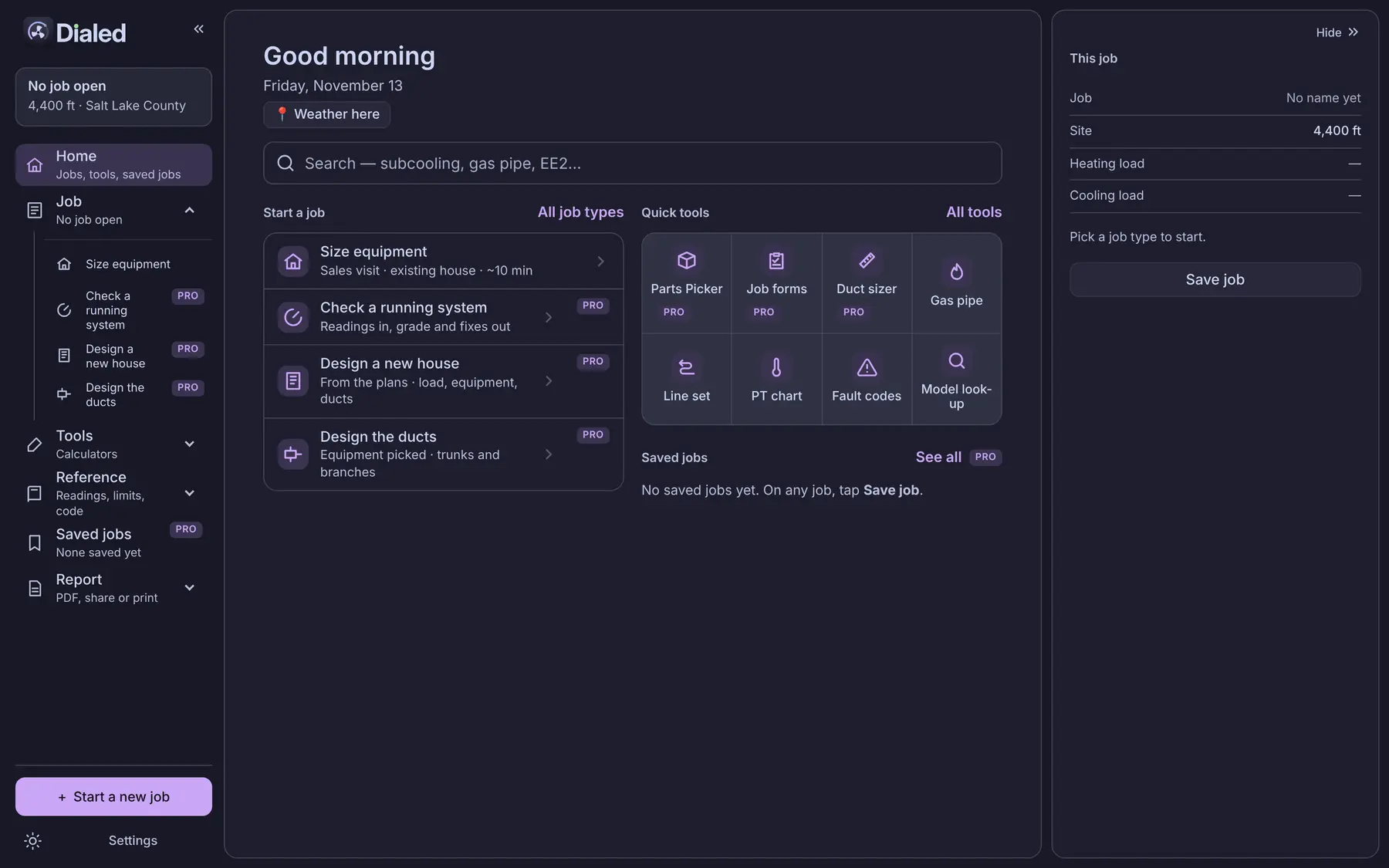
A field tool for HVAC sales and install crews. Run Manual J, S and D right in the house, check that a system is sized and set up right, and pull up the quick numbers you’d otherwise dig through a manual for.
what it is
Manual J, S and D for the mountains.
Most calculators assume sea level. This one is built for the Wasatch Front, from about 4,200 ft up past 7,000 ft in Park City, so furnace output, derate and airflow are figured for the elevation the house actually sits at. It covers residential furnace, coil and condenser systems and dual-fuel heat pumps.
why i built it
Sizing should be checked, not guessed.
Like-for-like swaps happen every day, and nobody wants to haul a load calc program into an attic. I wanted a quick, honest way for sales to check size on site and for me to work through the complicated jobs, with every number traced back to where it came from.
how a job runs
Walk the house, get the answer. It asks in the order you’d see it, and only for what it needs.
- start a jobJob type, elevation and the house basics.
- the roomsWalls, ceilings, windows and floors, room by room.
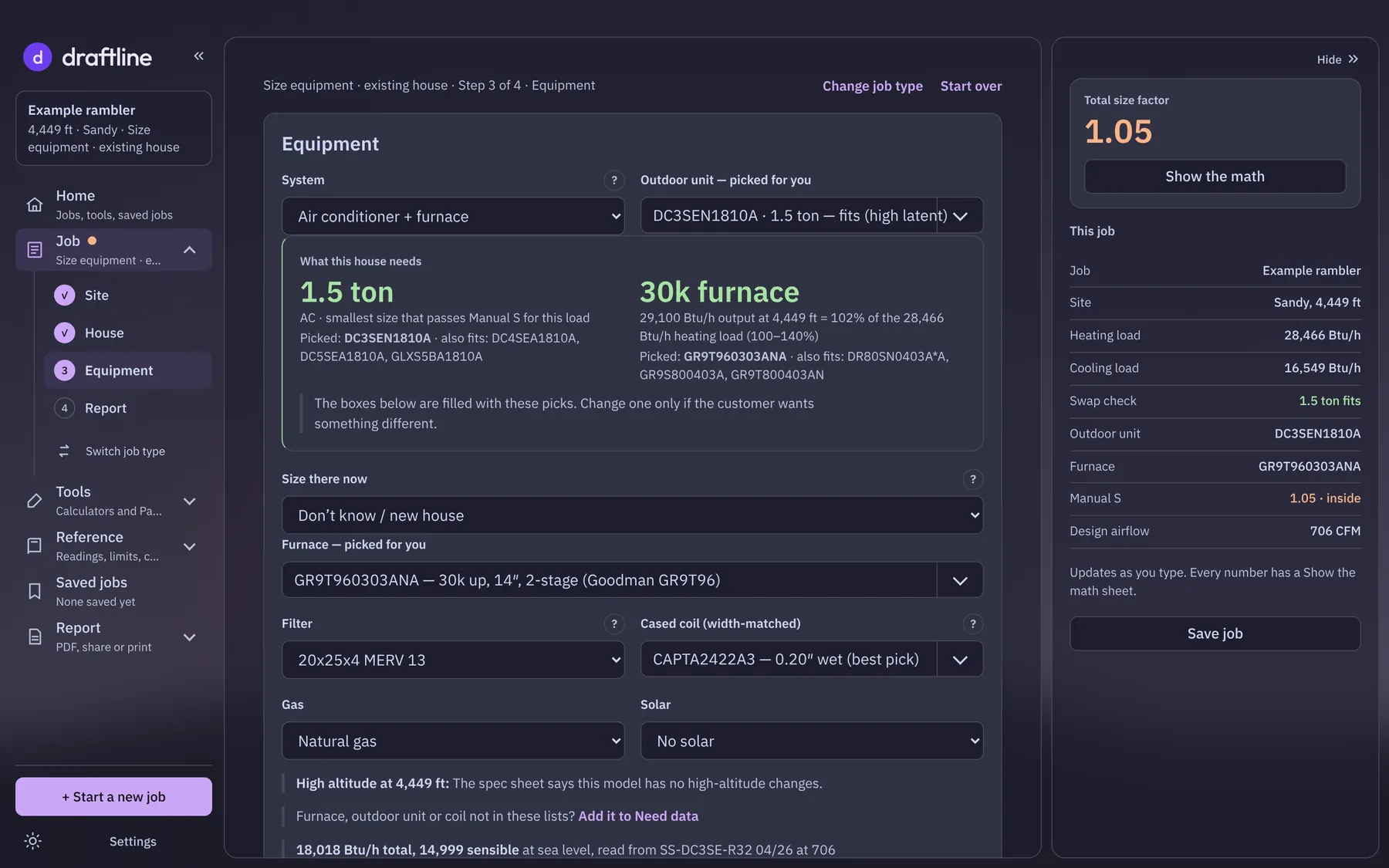
- equipmentPick the furnace, coil and condenser and check the match.
- ductsSize new ducts or check the ones already there.
- summary and reportOne page with the results, ready to print or save.
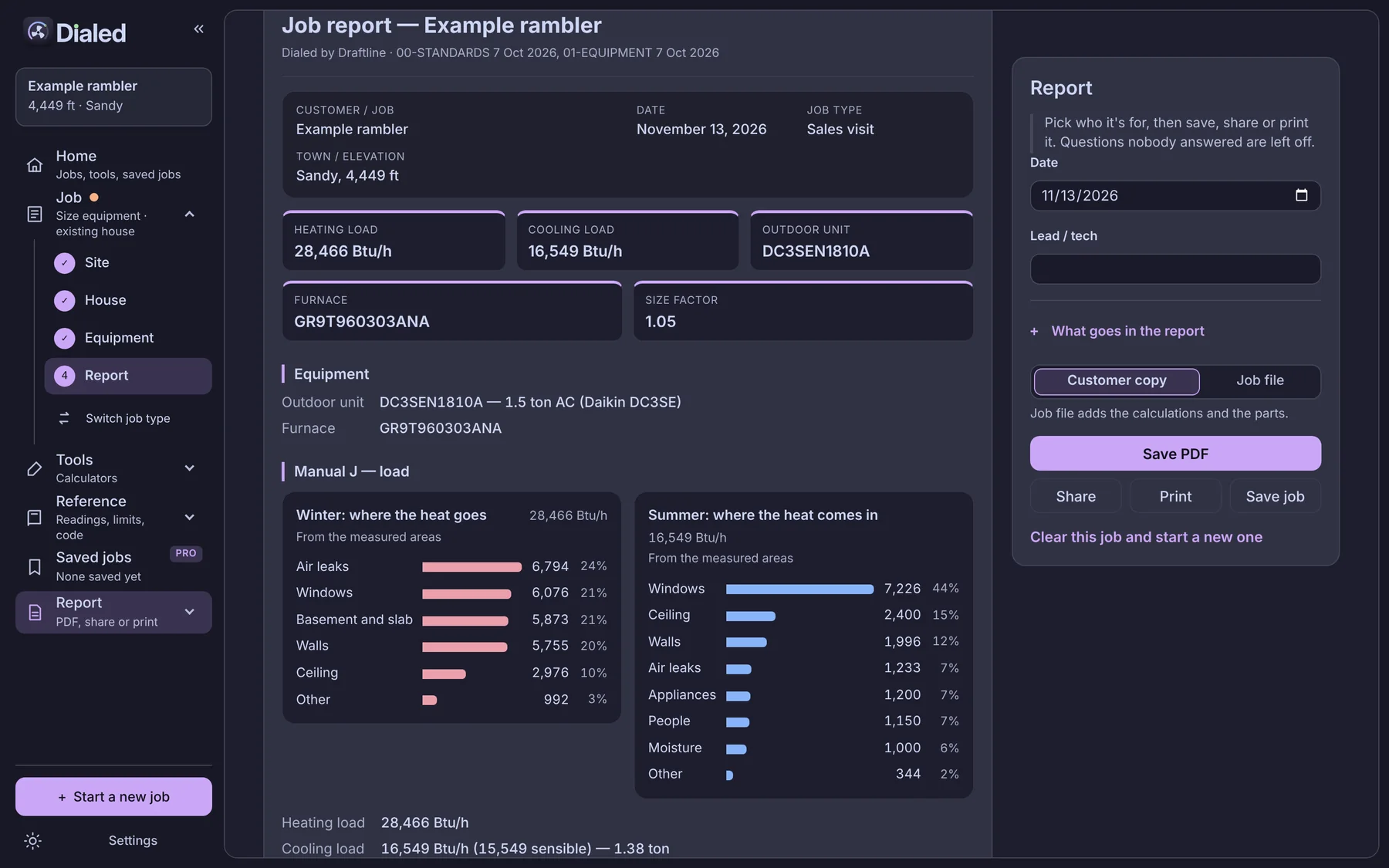
The worked example: a 3,200 sq ft rambler in Sandy at 4,449 ft. The load comes out first, then the equipment that fits it.
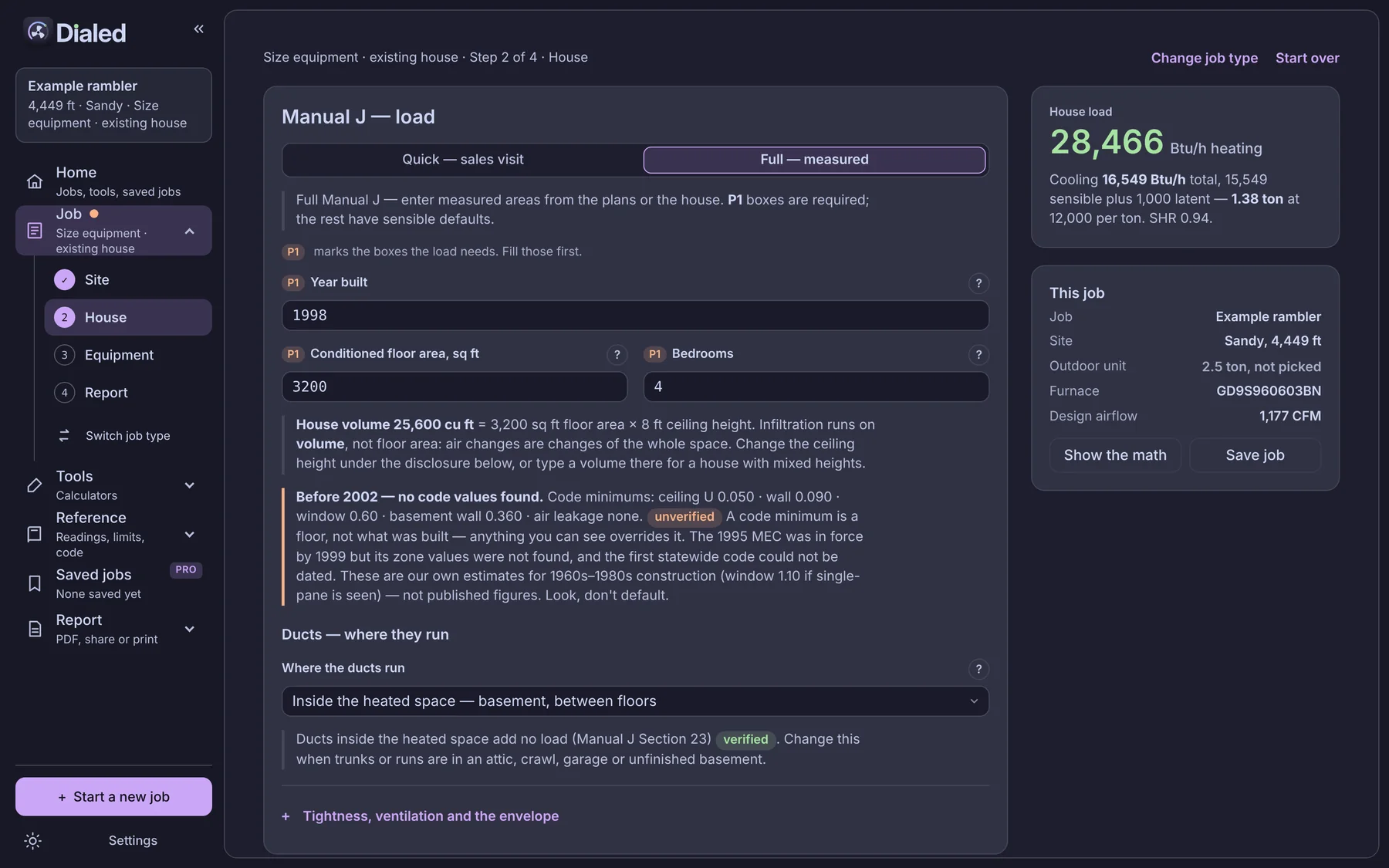
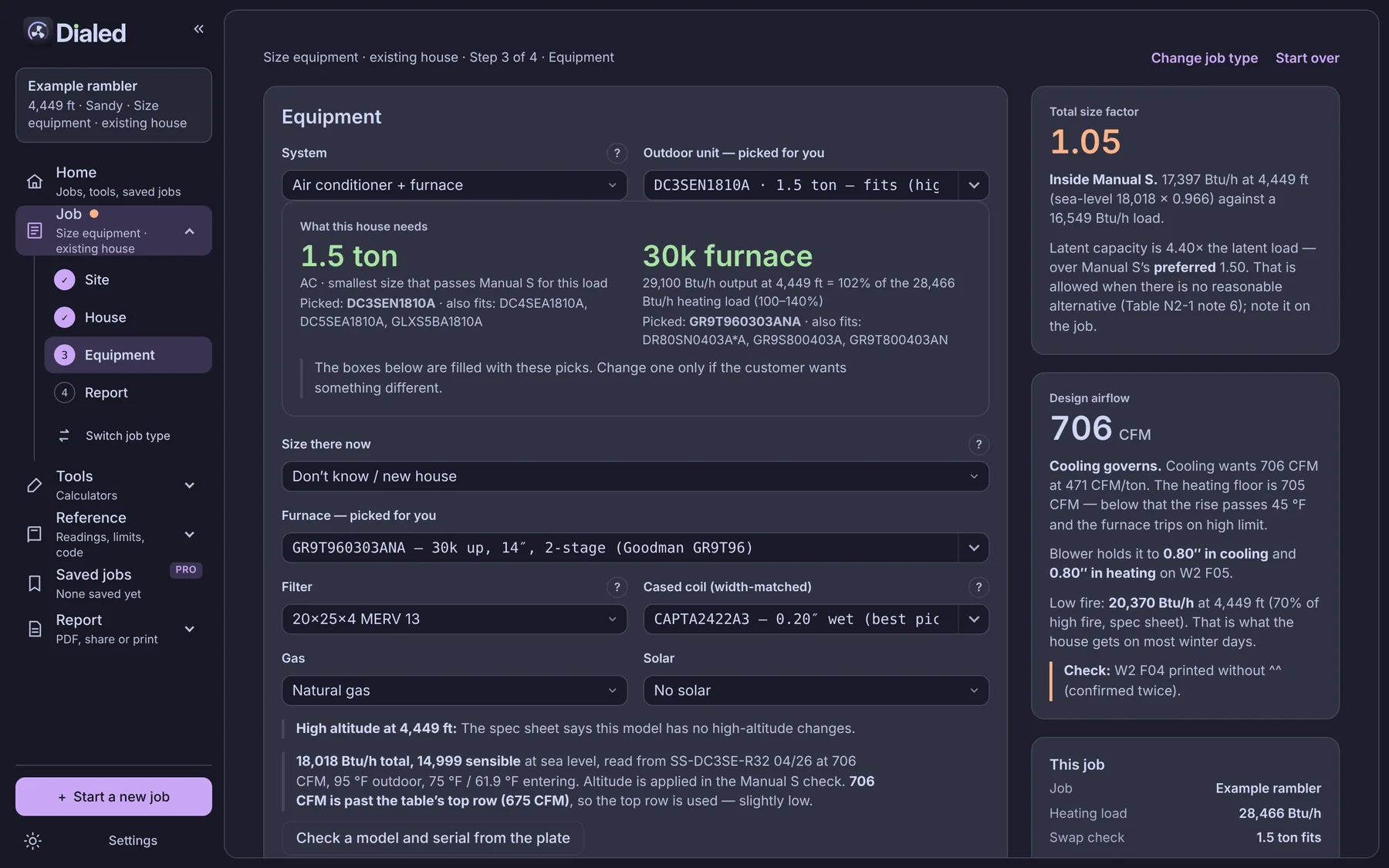
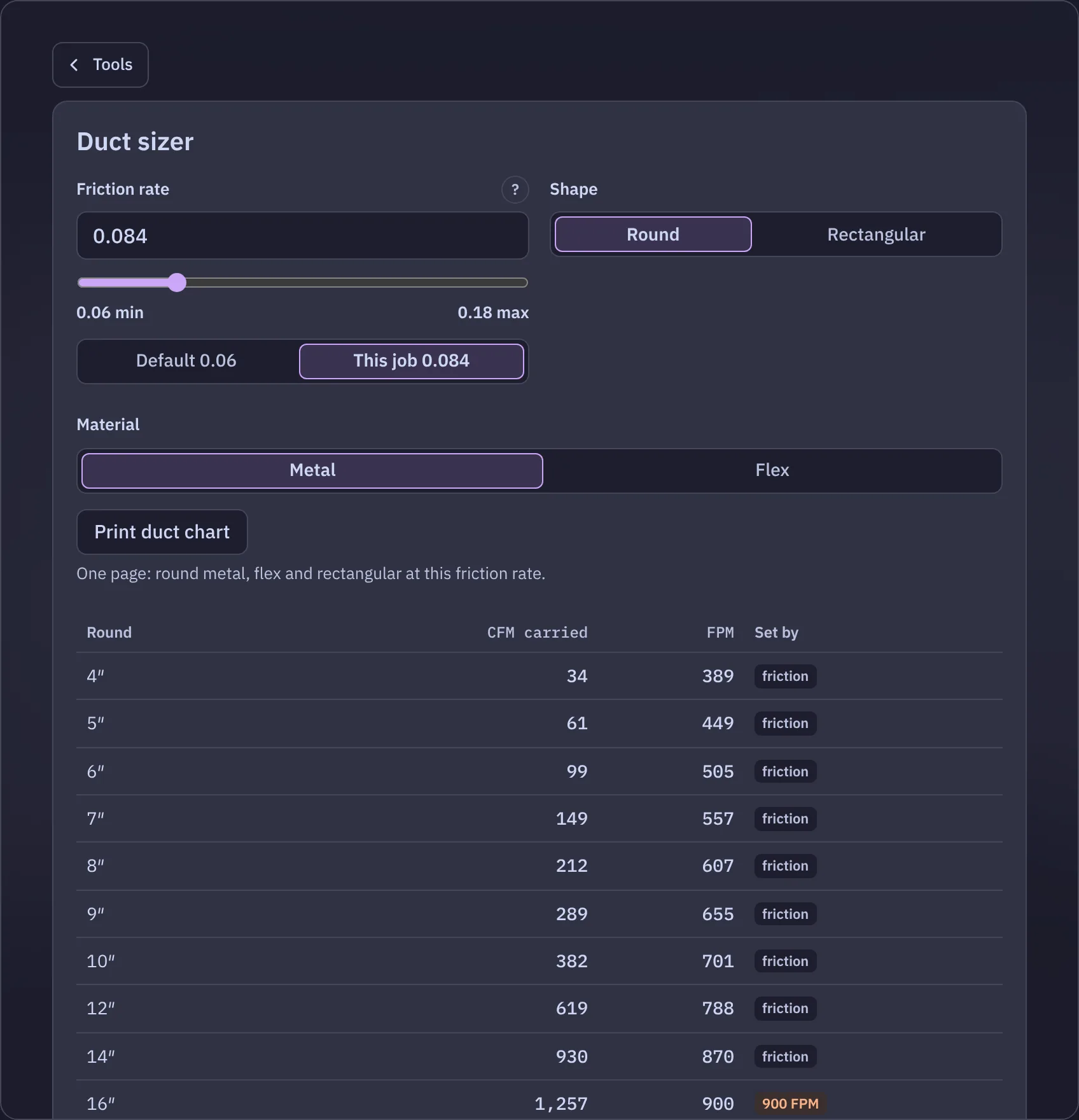
two tools, up close
The duct sizer and the furnace derate, the way a crew sees them on site.
the design checks
From the house to the registers. Sizing equipment and its on-screen report are free; the rest will be Pro: $50 once, no subscription.
manual j load calculation
Room by room heating and cooling loads: walls, ceilings, windows and glass doors, basement and slab losses.
manual s equipment
Matches the furnace, coil and condenser to the load, with furnace output figured at the job’s elevation.
manual d ducts
Supply trunk, branch runs and return sized from the friction rate, with the reasoning shown, not just the answer.
existing ducts
Check what’s already in the house: round and rectangular duct CFM, trunk sections and branches.
static pressure
Enter your readings and see whether the duct system and filter are choking the blower.
heat pump in winter
Where a dual-fuel heat pump hands off to the furnace when it gets cold.
parts picker
Answer a few questions about the job and get a parts list to pull, built from rules you can edit and a parts catalog you can add to.
job forms
A job sheet and an install check to fill out on site, with photos, then print or save as a PDF. Change the questions or build your own forms.
quick tools
The look-ups you’d dig through a manual for. These stay free.
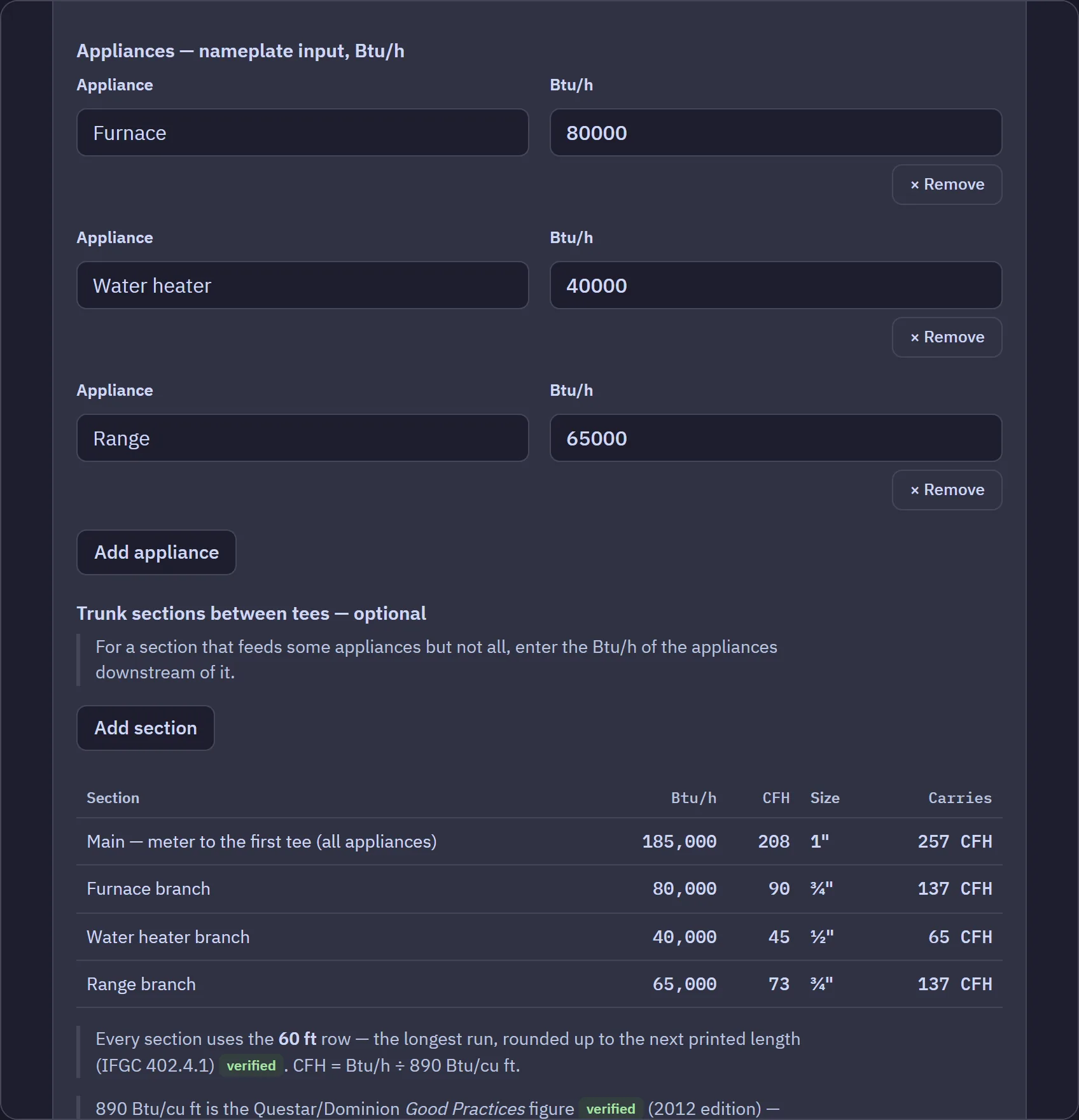
gas pipe sizer
Gas pipe sizing by Btu: enter each appliance’s input and the run length, and get the size of the main and every branch.
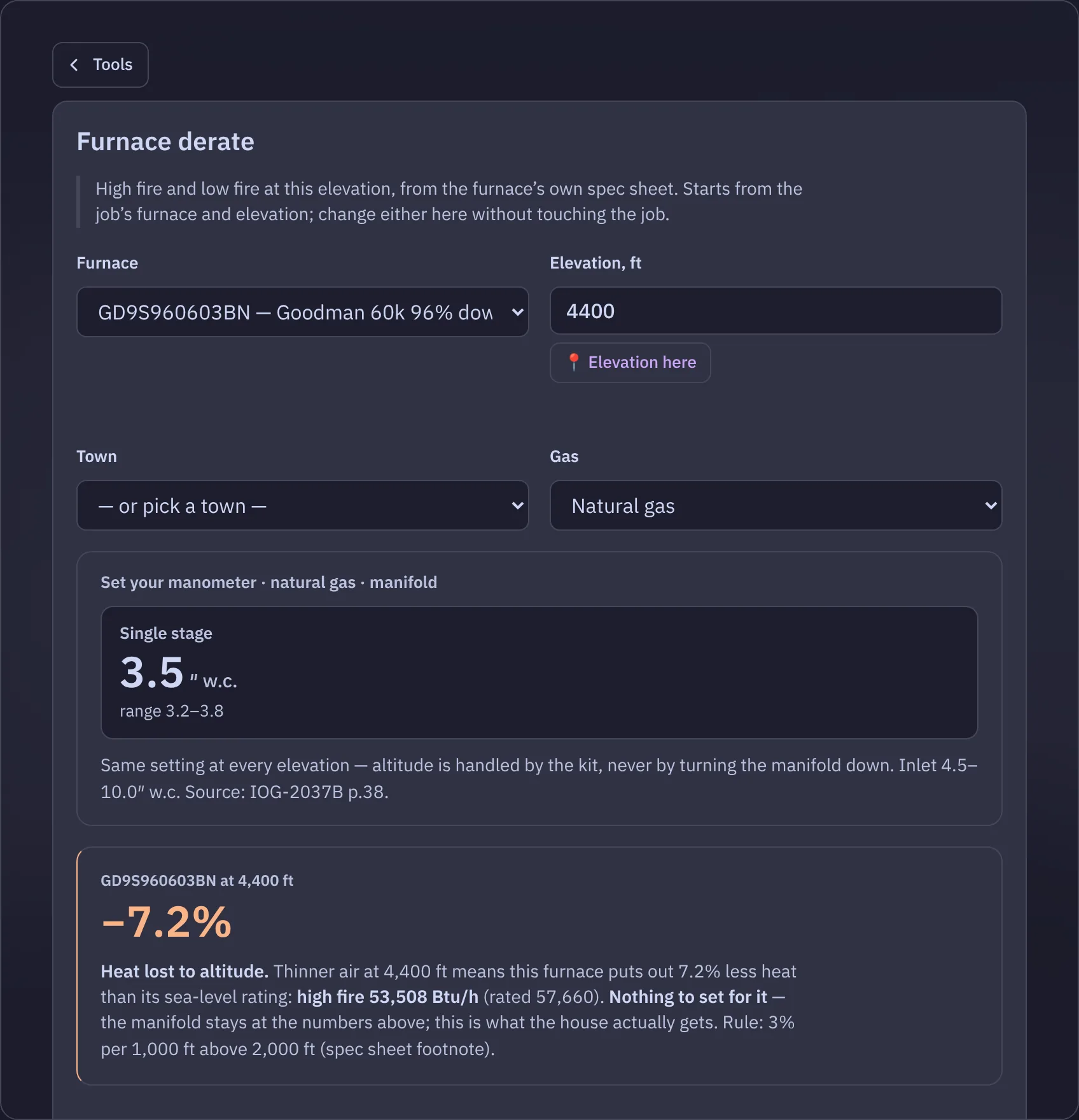
furnace altitude derate
Furnace output at the house’s elevation, from the furnace’s spec sheet, and how one furnace performs across different elevations.
combustion air
Whether the room has enough air for the gas appliances in it.
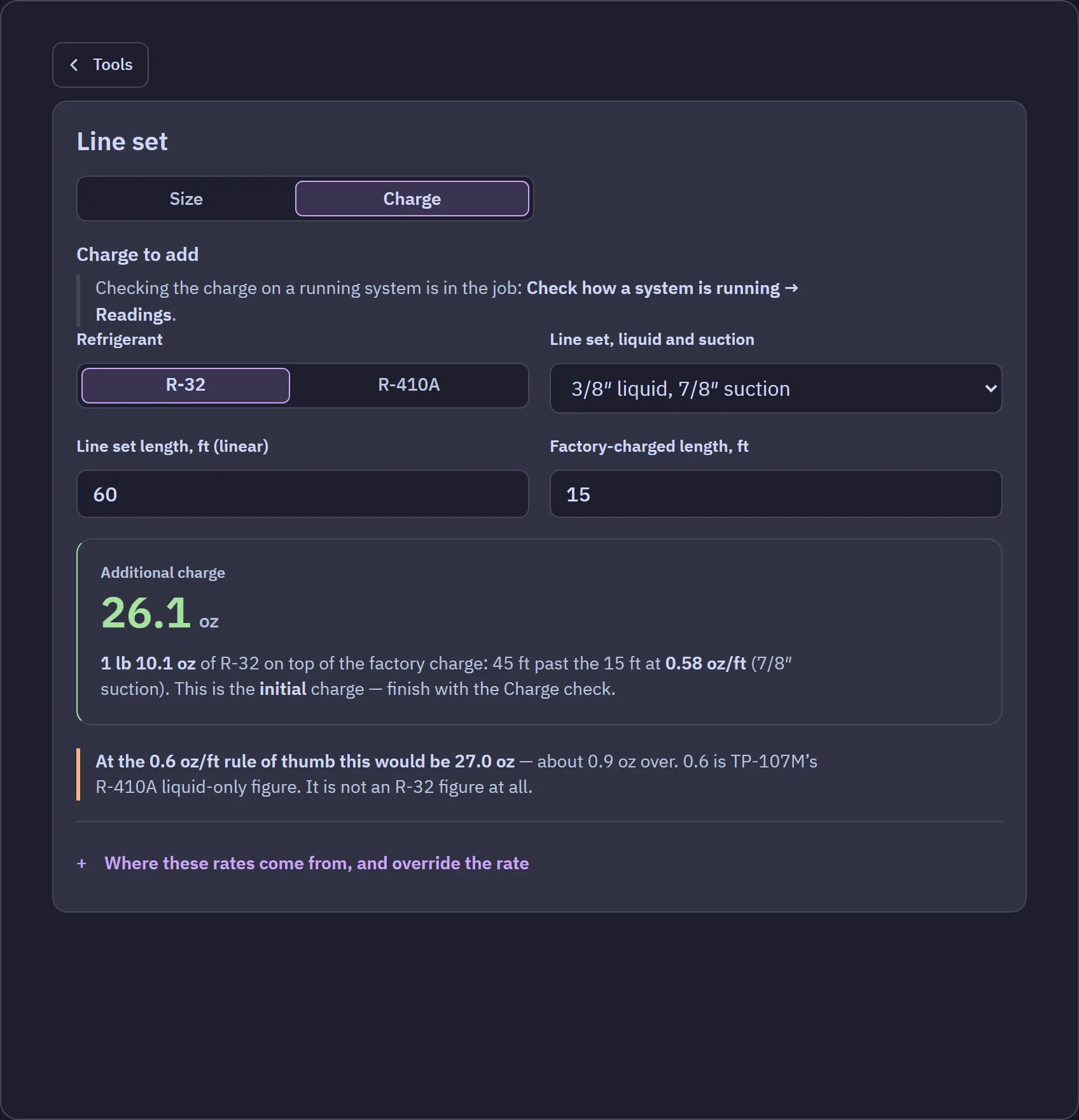
line set sizing
Line sizes and how much refrigerant charge to add for the run.
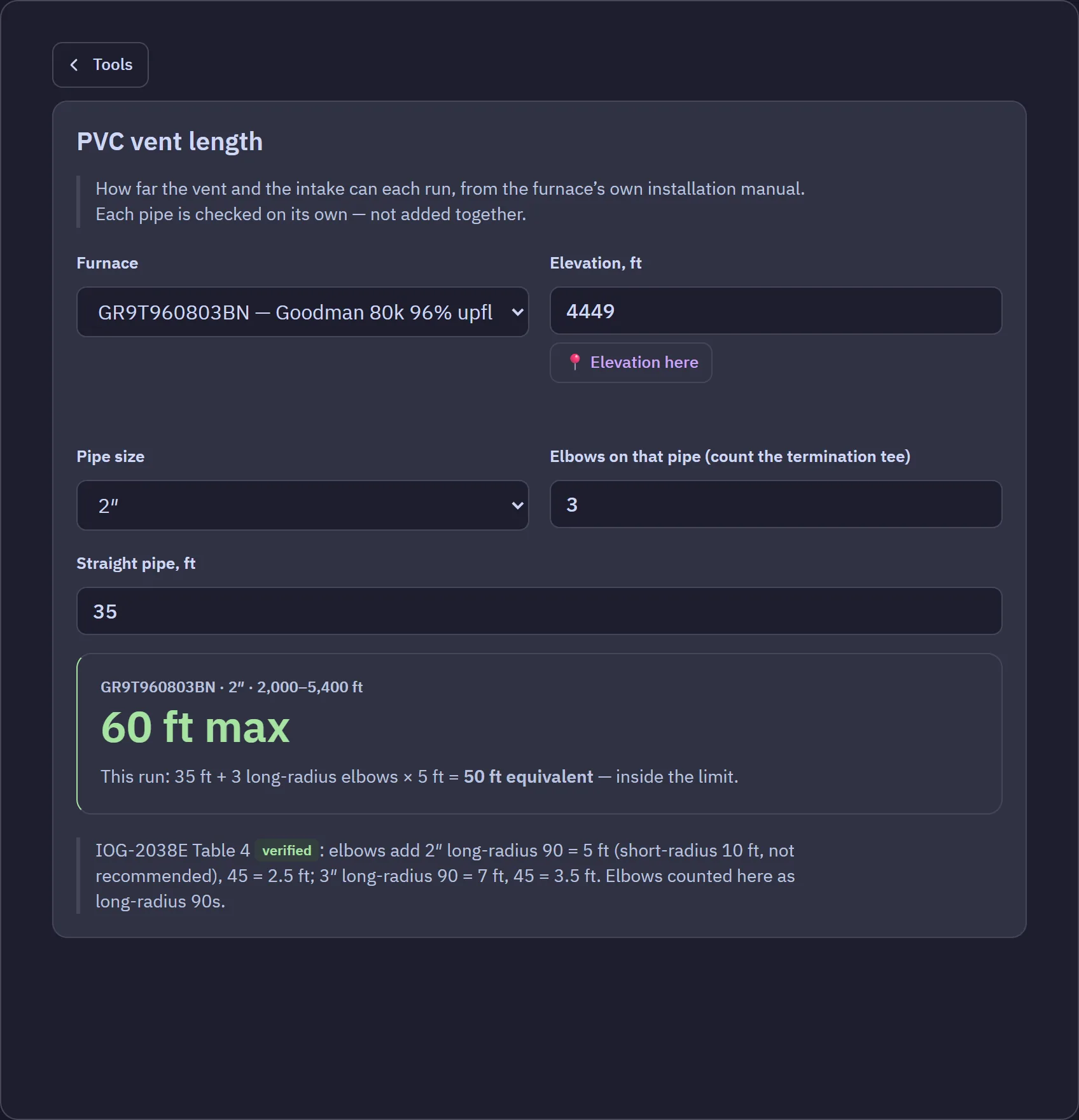
pvc vent length
Maximum vent lengths for the furnace and fittings you’re using.
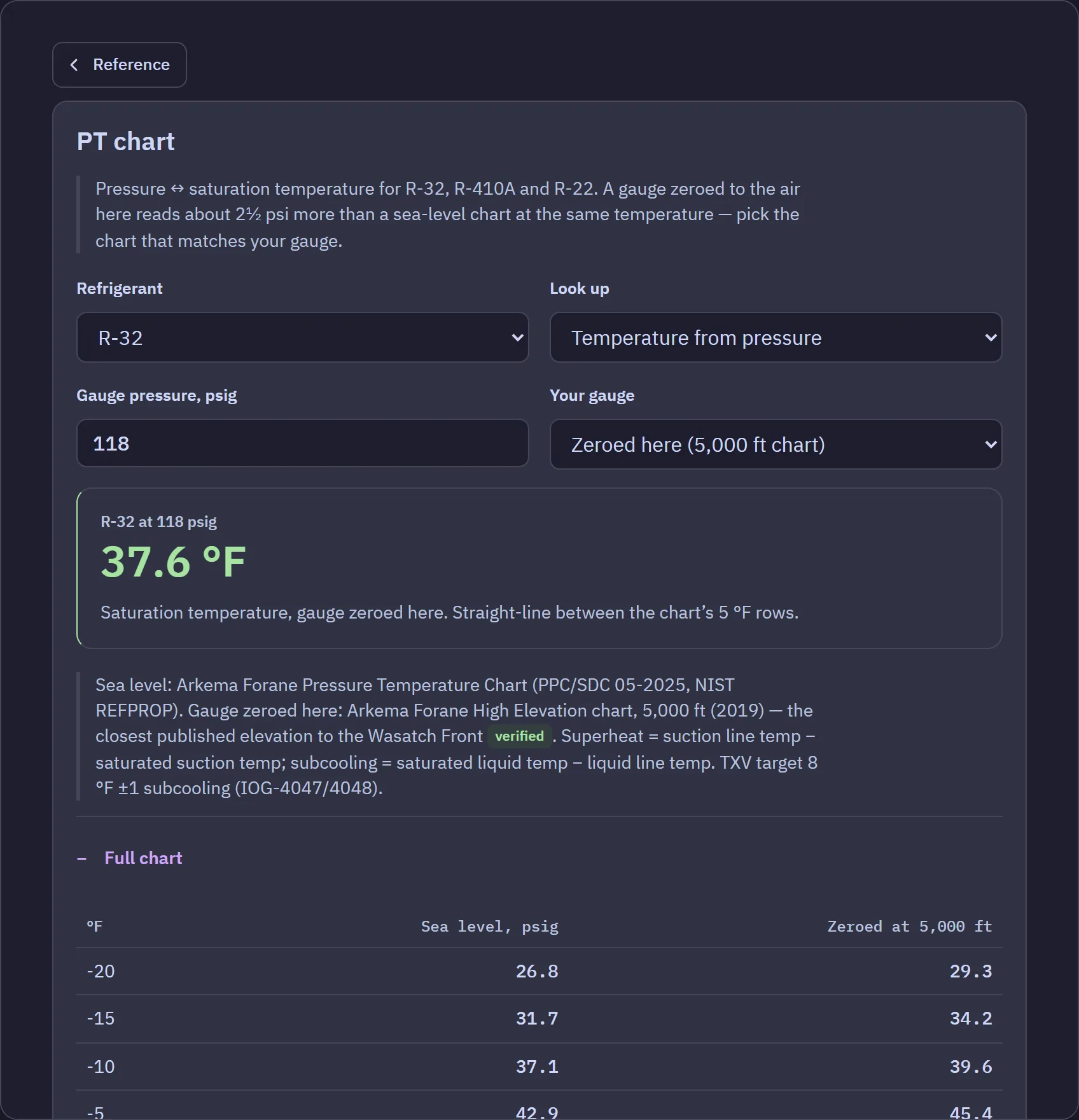
pt chart
Pressure and temperature for R-32 and R-410A, for a gauge set to sea level or one zeroed at 5,000 ft, plus R-32 coil checks.
fault codes and model look-up
Look up a fault code or a model number and get the specs you need.
on the job site
Built for crews, not just designers: wiring cards, a start-up checklist, and a clean report to leave behind.
field cards
Quick wiring and setup cards for thermostats, humidifiers and UV lights.
system report
A printable report of the design and the readings for the job file.
saved jobs
Save a job and pick it back up later, right where you left it.
rebates
Shows which rebates a job may qualify for.
works offline
Installed on a Windows PC, it runs with no signal, in a basement or an attic.
numbers you can trust
Every figure says where it came from: ACCA manuals, manufacturer spec sheets and the codes Utah has adopted, each tagged so you know how much to lean on it.
- verified
Checked against a named source.
- derived
Worked out from verified numbers.
- chosen
A design choice, and it says so.
- unverified
Flagged until it can be confirmed.
A check tool for residential systems. Not a permit document.
questions
The short answers.
What is Dialed?
A field tool for HVAC sales and install crews. It runs Manual J, S and D for residential systems at the job’s elevation, and has the quick look-ups you would otherwise dig through a manual for.
Why does altitude matter?
Most calculators assume sea level. Dialed is built for the Wasatch Front, from about 4,200 ft up past 7,000 ft, so furnace output, derate and airflow are figured for the elevation the house sits at.
What systems does it cover?
Residential furnace, coil and condenser systems and dual-fuel heat pumps.
Is Dialed free?
The download, sizing equipment and the quick tools are free: gas pipe sizer, furnace derate, combustion air, line set sizing, PVC vent length, the PT chart and fault codes. The other job types, the Parts Picker and job forms are Pro, $50 once with no subscription, and Pro sales open soon.
Does it figure furnace derate at high altitude?
Yes. The furnace derate tool shows furnace output at altitude and how one furnace performs across different elevations. It is a free quick tool.
Does it have an R-32 PT chart?
Yes. The PT chart gives pressure and temperature for R-32 and R-410A, and it is free.
Can I use it for a permit?
No. It is a check tool for residential systems, not a permit document.
Where do the numbers come from?
ACCA manuals, manufacturer spec sheets and the codes Utah has adopted. Every figure is tagged verified, derived, chosen or unverified, so you know how much to lean on it.
Does it work offline?
Yes. Installed on a Windows PC, it runs with no signal, in a basement or an attic.
the quick tools stay free. pro is coming, $50 once.
Pro will add the other job types (new house, ducts, system check), the Parts Picker and job forms, saved jobs, and the printed report and duct chart.